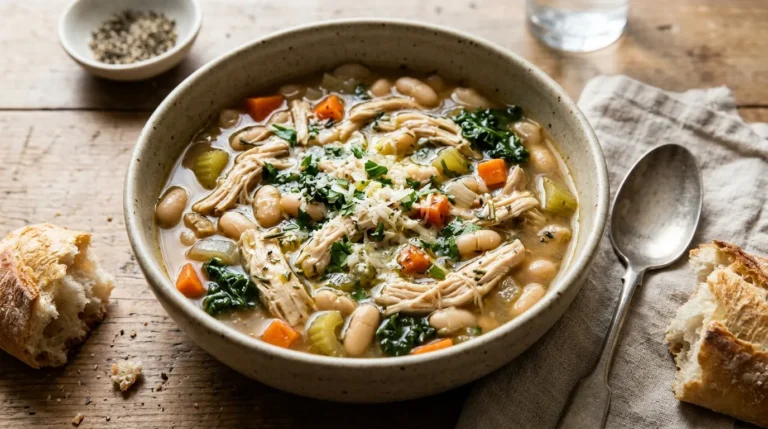
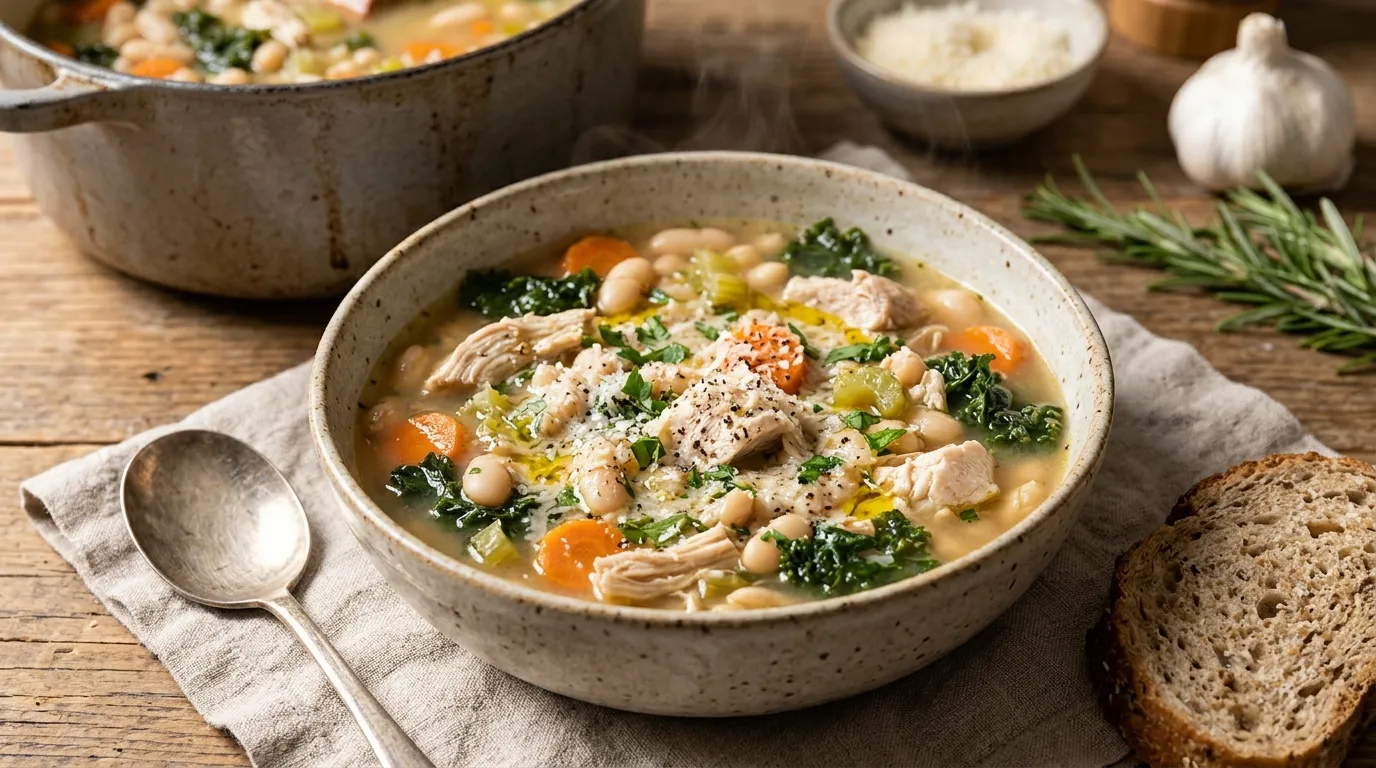
High Protein Chicken White Bean Soup
A comforting bowl of high protein chicken white bean soup delivers a hearty meal that keeps you full for hours. Cannellini beans add extra protein and fiber to chicken soup, making it a nutritious choice for lunch or dinner.
This guide covers essential white bean chicken soup ingredients, step by step preparation methods, and storage tips for leftovers. You will also learn how to use rotisserie chicken for speed, incorporate olive oil for sauteing vegetables, and finish the dish with a squeeze of lemon juice.
Chicken and Bean Prep

Combining lean poultry with nutrient dense legumes creates a satisfying meal that keeps hunger away for hours. This specific dish pairs tender poultry with plant based protein sources for a filling supper.
According to Upstate Medical University, cannellini beans add extra protein and fiber to chicken soup. Mixing these two protein powerhouses gives you a meal that supports muscle recovery while keeping meals light and cozy.
Fitness enthusiasts rely on this combination because it delivers sustained energy without heavy fats. Lean poultry provides essential amino acids, while legumes bring complex carbohydrates and steady fiber.
Building this meal starts with the right foundation in your Dutch oven or stockpot. Olive oil is used for sauteing the soup vegetables, creating a flavorful base for the aromatics.
Standard components for white bean chicken soup include chicken stock and shredded chicken. Using rotisserie chicken can be used to make chicken vegetable soup quick and easy on busy weeknights.
Fresh herbs elevate the pot with aromatic depth. Fresh dill and bay leaf are used as herbs to season the broth naturally.
Tossing in greens brings color and texture to the pot. Black kale or cavolo nero adds color and texture according to common culinary guidance.
Brightening the broth at the very end balances the rich savory flavors. Lemon juice is added at the end to brighten the soup, cutting through the richness of the poultry and broth.
Finishing touches bring the whole bowl together just before serving. Parmesan cheese is used as a finishing element in many traditional kitchens to add a nutty, savory note.
Essential Soup Ingredients

Building a flavorful high protein chicken white bean soup starts with gathering simple pantry staples and fresh market produce that work together to create a deeply savory bowl. Understanding what goes into your pot helps you balance taste, texture, and nutrition.
Here are the core components you need for your chicken and white bean soup ingredients list:
- Chicken stock and shredded chicken form the foundational base of the recipe, providing a rich, savory broth and lean meat that satisfies your appetite.
- Cannellini beans add extra protein and fiber to chicken soup, making the dish much more filling.
- Olive oil is used for sauteing the soup vegetables, helping to soften aromatics like onions, carrots, and celery at the start of cooking.
- Lemon juice is added at the end to brighten the soup, cutting through the savory depth with a refreshing citrus finish.
- Rotisserie chicken can be used to make chicken vegetable soup quick and easy on busy weeknights when you do not want to cook meat from scratch.
- Fresh dill and bay leaf are used as herbs to infuse the simmering broth with earthy, aromatic notes.
Beyond the core list, common guidance suggests incorporating black kale or cavolo nero for added color and texture, as well as finishing individual bowls with grated parmesan cheese for an extra layer of savory richness. Selecting quality components ensures your high protein white bean soup turns out nourishing every single time.
Flavorful Herbs And Finishes

Building a rich flavor profile in a high protein chicken white bean soup relies on deliberate herb selection and smart finishing touches. Fresh dill and bay leaf are used as herbs to build a savory herbal depth in the pot, while parmesan cheese is widely used as a common finishing element to elevate the final bowl.
Adding fresh dill introduces a bright note that balances the hearty nature of the broth. Bay leaf infuses a subtle background aroma while the mixture simmers. To get the most out of these aromatics, add whole bay leaves at the beginning of the cooking process so they have time to release their essential oils, and stir in fresh dill near the end of cooking so it retains its vibrant color and fresh punch.
When preparing the base of a high protein white bean soup, home cooks often incorporate black kale or cavolo nero because it adds color and texture to the pot. These sturdy greens hold up well against long simmering times without dissolving into the broth. A common mistake is adding delicate greens too early, which causes them to turn mushy and lose their appealing bite.
For the final presentation, grated parmesan cheese serves as a popular finishing element when sprinkled over individual bowls just before serving. The warmth of the hot liquid melts the cheese slightly, creating a savory richness. Another essential step for brightening the flavor just before eating is stirring in fresh lemon juice, which cuts through the heavy proteins and ties all the savory elements together.
Stove And Instant Pot Methods

Why the two methods both work
Both stovetop simmering and Instant Pot pressure cooking rely on the same flavor foundation: olive oil for sautéing the vegetables, chicken stock and shredded chicken for a savory base, and aromatic herbs such as fresh dill and bay leaf. Olive oil is used for sautéing the soup vegetables, which helps onions, carrots, and celery soften quickly without burning. The stock extracts protein and gelatin from the chicken, while the shredded rotisserie chicken adds protein and speeds up preparation because rotisserie chicken can be used to make chicken vegetable soup quick and easy.
When the liquid is heated, the cannellini beans release starches that thicken the broth and, as Upstate Medical University confirms, cannellini beans add extra protein and fiber to chicken soup.
Step‑by‑step for stovetop cooking
- Heat 2 tablespoons of olive oil in a large pot over medium heat.
- Add diced onion, sliced carrot, and chopped celery; sauté 5, 7 minutes until softened.
- Stir in minced garlic and a pinch of dried oregano, basil, thyme, and paprika for depth.
- Pour in chicken stock (low‑sodium if desired) and bring to a gentle boil.
- Add shredded rotisserie chicken, rinsed cannellini beans, and a bay leaf.
- Reduce heat and let the soup simmer gently while you finish other tasks; this allows flavors to meld naturally.
- During the last 5 minutes, stir in chopped fresh dill, black kale or cavolo nero for color and texture, and a splash of lemon juice to brighten the soup.
- Serve with a sprinkle of parmesan cheese as a finishing element.
Step‑by‑step for Instant Pot cooking
- Select the “Sauté” function, add olive oil, and cook the onion, carrot, and celery until softened.
- Turn off “Sauté,” add garlic, dried herbs, chicken stock, shredded rotisserie chicken, cannellini beans, and bay leaf.
- Seal the lid, set to “Manual” high pressure for 8 minutes, then allow a natural release for 5 minutes before quick‑releasing the remaining pressure.
- Open the pot, stir in fresh dill, kale or cavolo nero, and lemon juice.
- Dish out the soup and finish with parmesan cheese.
Both approaches produce a high protein chicken white bean soup that satisfies fitness‑focused home cooks. The stovetop method offers a hands‑off simmer that fits busy evenings, while the Instant Pot delivers a finished bowl in under 20 minutes from start to finish.
Common pitfalls and how to avoid them
- Adding delicate herbs or lemon juice too early. Simmering lemon juice or fresh greens for too long can mute their bright flavors and turn the vegetables mushy. Add these ingredients at the very end, as recommended by culinary guidance.
- Overcrowding the pot. Too many ingredients can lower the temperature and extend cooking time, especially on the stove. Keep the pot at a steady medium heat and stir occasionally.
- Using high‑sodium broth. Choose low‑sodium chicken stock to keep the soup heart‑healthy and to control overall sodium levels.
- Skipping the final seasoning. A pinch of salt, freshly ground pepper, and the lemon‑juice brightening step are essential for balanced flavor.
This flexible recipe works for anyone who wants a comforting, protein‑rich meal without spending hours in the kitchen. Whether you are a busy professional, a fitness enthusiast tracking macronutrients in chicken soup, or a home cook who loves the convenience of rotisserie chicken, the stovetop and Instant Pot methods give you the tools to create a nourishing bowl that can be stored, frozen, and reheated without losing texture.
Boosting Daily Protein

Creating a truly satisfying high protein chicken white bean soup requires intentional ingredient choices that maximize nutrition without adding unnecessary steps to your cooking routine. When you want to increase the protein in chicken soup, combining lean poultry with wholesome legumes delivers a complete profile that satisfies hunger and supports muscle recovery. Understanding how to layer these components correctly makes a noticeable difference in both texture and overall nutritional value.
The primary advantage of a high protein white bean soup comes from merging two distinct food groups. According to a university nutrition guide from Upstate Medical University, cannellini beans add extra protein and fiber to chicken soup, making the legume a natural partner for boosting nutrient density. Meanwhile, using rotisserie chicken can be used to make chicken vegetable soup quick and easy, saving valuable time on the stovetop while providing a solid foundation of lean poultry.
To get the best results when preparing chicken and white bean soup ingredients, consider these practical steps:
- Select lean poultry options, noting that USDA FoodData Central shows chicken breast delivers more protein per weight than most beans.Incorporate canned cannellini beans after rinsing them thoroughly to reduce excess sodium while retaining their valuable fiber content.Simmer the poultry and legumes together in chicken stock so the flavors meld deeply before adding finishing touches like olive oil or lemon juice.
A common mistake when trying to increase protein in soup is relying on just one source, which leaves out valuable nutrients like dietary fiber. By pairing high protein poultry with fiber rich beans, your high protein chicken white bean soup achieves a balanced profile that outperforms a single protein version. Below is a quick look at how the two key components stack up against each other.
| Ingredient | Protein Level | Fiber Level |
|---|---|---|
| Shredded rotisserie chicken | High | Low |
| Cannellini beans | Moderate | High |
Another pitfall to avoid is overcooking the beans, which can cause them to break down completely and turn the broth into a thick mash rather than a hearty broth. Add your legumes during the final stages of simmering if you prefer them to hold their shape, or let them soften slightly if you want a richer, thicker consistency. Balancing these elements ensures your soup remains nourishing, flavorful, and structurally sound from the first serving to the last.
Storage And Reheating Safety

Why proper cooling and storage matter
Cannellini beans add extra protein and fiber to chicken soup, making them a nutritional centerpiece. When beans are cooled too slowly or reheated too aggressively, their cell walls break down, resulting in a mushy texture and loss of the hearty bite that high-protein meals rely on. Keeping the soup at safe temperatures also prevents bacterial growth, protecting the protein quality of the shredded chicken and the flavor of the olive-oil-sautéed vegetables.
Step-by-step cooling, storing, and freezing
1. Cool quickly but safely. After cooking, transfer the soup to a wide, shallow pan and let it sit for about 20 minutes at room temperature. Stir occasionally so heat dissipates evenly. This short cooling window reduces the time the soup spends in the danger zone (40 °F, 140 °F).
2. Refrigerate for short-term leftovers. Portion the cooled soup into airtight containers and place them in the refrigerator. The soup stays fresh for three to four days. The airtight seal helps retain moisture, so the beans and chicken remain tender.
3. Freeze for longer storage. If you need to keep the soup beyond a few days, let it reach room temperature, then spoon it into a freezer-safe container, leaving about an inch of headspace. The extra space accommodates the expansion of liquid and vegetables as they freeze, preventing container rupture.
4. Label with date and portion size. Recording the freeze date and intended serving size makes it easy to plan meals and track how long the soup has been stored.
Thawing and reheating without sacrificing texture
Gradual thawing is essential. Move the frozen container to the refrigerator at least twelve to twenty-four hours before you plan to eat. This slow transition keeps the beans from cracking and the chicken from drying out. Avoid countertop thawing, because uneven temperatures can promote bacterial growth and cause the beans to become overly soft.
Gentle reheating preserves the beans. Pour the thawed soup into a saucepan, add a splash of chicken stock if it looks thick, and heat over medium-low heat. Stir every few minutes to distribute warmth evenly. Bring the soup to a gentle simmer, just enough to see small bubbles around the edges, rather than a rolling boil, which can shred the chicken further and turn the beans to mush.
Finish with brightening touches. Once the soup reaches serving temperature, stir in a dash of lemon juice to brighten the flavor, a tip confirmed by culinary experts. If you enjoy a finishing element, sprinkle a modest amount of parmesan cheese, as this is a common practice that adds a salty depth without overwhelming the delicate bean texture.
Common mistakes and who should follow these guidelines
Home cooks often skip the rapid-cool step, placing the pot directly in the fridge. This can trap steam, leading to soggy beans. Another frequent error is reheating on high heat, which forces the beans to break down. Fitness enthusiasts who rely on the high protein content of the soup should be especially vigilant, as overcooking can diminish both texture and the nutritional value of protein-rich ingredients such as chicken breast, shredded rotisserie chicken, and the cannellini beans.
These storage and reheating practices suit anyone preparing nutrient-dense chicken and bean meals, whether you are making a quick weekday dinner with rotisserie chicken or batch-cooking for meal-prep. By cooling promptly, storing airtight, thawing slowly, and reheating gently, you keep the soup protein, fiber, and comforting flavor intact for days to come.
FAQ
How do I make a hearty chicken and white bean soup?
You start by heating olive oil in a large pot to saute your aromatic vegetables before adding chicken stock and shredded chicken. Incorporating cannellini beans is a key step, as these beans add extra protein and fiber to chicken soup while creating a hearty texture.
What are the essential chicken and white bean soup ingredients?
Core components for this dish include chicken stock, shredded chicken, and cannellini beans. You can use rotisserie chicken to make the process quick and easy, while fresh dill and bay leaf provide classic herbal notes.
How can I brighten the flavor of my soup?
Adding lemon juice at the end of the cooking process is the best way to brighten the soup. This final touch cuts through the richness of the broth and balances the savory flavors of the chicken and beans.
Are there extra ingredients that add color and texture?
It is common practice to stir in greens like black kale or cavolo nero to add color and texture to the finished dish. Many home cooks also choose to finish their bowls with a sprinkle of parmesan cheese for added depth.
How long does this soup take to prepare and cook?
While exact timing depends on your specific method, this dish is generally a quick stovetop meal. Using pre-cooked or rotisserie chicken significantly reduces the total time spent in the kitchen compared to starting with raw chicken breast.
How should I store and reheat leftovers?
Store your soup in an airtight container in the refrigerator to keep it fresh for several days. When reheating, warm it gently on the stove over medium-low heat, adding a splash of water or extra chicken stock if the broth has thickened too much in the cold.
Conclusion
Deciding to gather your ingredients is the final step before you can enjoy a comforting bowl of hearty poultry and legume broth. You can easily adapt this dish by incorporating cannellini beans add extra protein and fiber to chicken soup for a nutrient dense meal. Grab your stock pot and get ready to cook tonight.
Sources: upstate.edu, annex.exploratorium.edu, bastyr.edu, articulate.strayer.edu