Creamy Lemon Garlic Chicken Pasta
Introduction to Creamy Lemon Garlic Chicken Pasta
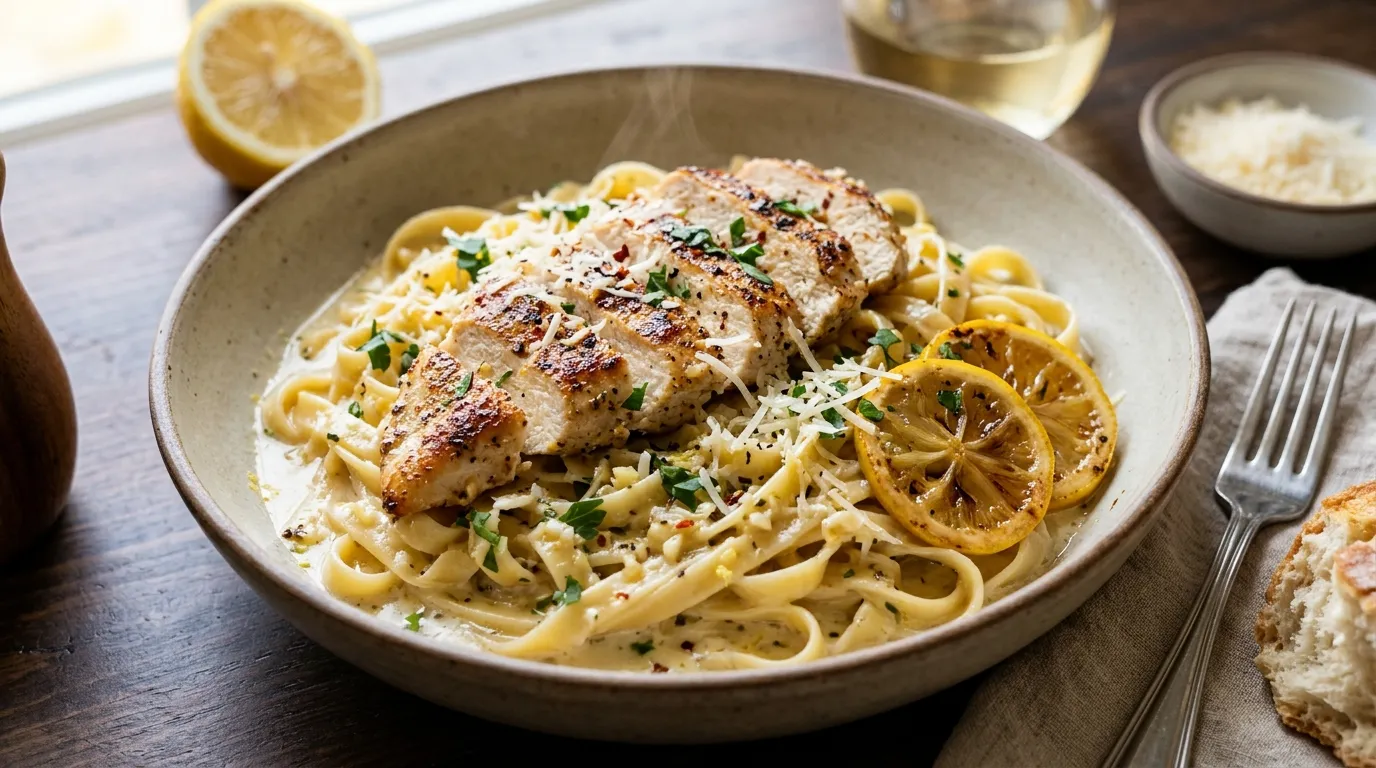
A comforting skillet meal of creamy lemon garlic chicken pasta brings warmth and satisfaction to any busy weeknight table. Heavy cream is a primary component for creating the base of a creamy pasta sauce. Tender chicken breast pieces, fragrant garlic cloves, and a rich sauce come together quickly for an inviting dinner.
Balancing heavy richness with bright citrus notes keeps the dish vibrant and prevents it from feeling too heavy. Lemon zest and lemon juice are used to balance the richness of cream-based sauces. This section covers the cozy weeknight appeal of the dish, and readers will learn the exact techniques needed to balance rich cream with bright citrus flavors successfully.
Essential Ingredients for the Ultimate Creamy Sauce

Crafting a luscious skillet dinner starts with heavy whipping cream as a primary component for creating the base of a creamy pasta sauce, according to research from Atlantis University. Good ingredients transform a standard weeknight meal into something truly special, bringing restaurant quality straight to your home kitchen.
Building a successful easy lemon garlic chicken pasta recipe requires an understanding of how individual components interact. When balancing heavy dairy fats with bright acid, certain items play a vital role:
- Heavy whipping cream: Forms the rich and velvety foundation that coats every single strand of noodles.
- Fresh garlic cloves: Provide a pungent and aromatic depth. In kitchen practice, garlic is often added after sautéing onions to prevent burning and bitterness.
- Quality parmesan cheese: Melts smoothly into the warm liquid, adding a sharp and savory flavor note.
- Tender chicken breast: Provides a lean and satisfying protein addition to complete the meal. As a common kitchen shortcut, leftover or rotisserie chicken can be used to reduce total prep time for busy weeknights.
- Fresh lemon zest and fresh lemon juice: Verified by Texas A and M University extension materials, lemon zest and lemon juice are used to balance the richness of cream-based sauces by cutting through heavy fats.
- Pasta cooking water: While not a standalone ingredient, common guidance and typical practice suggest that pasta cooking water contains starch that helps emulsify and thicken the sauce when combined with cheese and cream.
Selecting components thoughtfully helps prevent common mistakes, such as curdling or a greasy finish. Keeping your heat at a moderate level when introducing citrus and dairy ensures a glossy, cohesive texture every single time.
Choosing the Best Pasta Shapes for Creamy Sauces

Selecting the right cut of pasta makes a major difference when you are preparing a rich dinner, because textured surfaces and hollow centers hold onto heavy whipping cream much better than smooth, flat varieties. You want a noodle that traps sauce in every bite so that the chicken and the garlic lemon cream sauce blend together seamlessly rather than separating on the plate.
| Pasta Shape | Surface Texture | Sauce Retention |
|---|---|---|
| Penne | Ridged tube | High |
| Fettuccine | Long flat strand | Medium |
| Spaghetti | Smooth round strand | Low |
Ridged pasta features tiny grooves that trap thick dairy mixtures, while long strands rely on a coating action that works best with silky reductions. Short tubular varieties catch bits of garlic and meat inside their openings, creating flavorful pockets. Long ribbons wrap nicely around tender pieces of chicken breast, though smooth varieties often let heavy liquids slide right off the surface.
When picking out varieties for your dinner, understanding the mechanics of how sauce clings to wheat is essential. Smooth noodles force velvety liquids to pool at the bottom of your bowl, leaving the strands practically naked. Textured shapes act like tiny anchors. If you are aiming for a robust skillet bake or a quick weeknight meal, opt for shapes with ridges, twists, or hollow cores that physically scoop up the sauce as you stir.
A common mistake when cooking pasta for rich dishes is choosing delicate, long strands that cannot support heavy mix-ins like diced poultry and grated parmesan cheese. Another pitfall is rinsing the noodles after boiling them, which strips away the natural starches needed to bond the dairy to the grain. Instead, transfer your cooked pasta directly from the boiling pot into your simmering sauce. Tossing the noodles directly into the pan allows the starches left on the exterior to merge with your heavy whipping cream, building a cohesive, luxurious finish without needing extra thickeners.
Emulsifying Pasta Water for Sauce

You bind the sauce together by using starchy pasta water to bridge the gap between fat and liquid. Common guidance shows that pasta cooking water contains starch that helps emulsify and thicken the sauce. This starchy liquid transforms loose ingredients into a glossy coating that clings smoothly to your dinner instead of pooling at the bottom of the bowl. When preparing dishes like creamy lemon garlic chicken pasta, managing this binding process prevents your sauce from breaking or separating.
Integrating this liquid correctly requires a specific technique to achieve the right texture. You should scoop out a cup of the boiling liquid right before draining your noodles. Pour a small splash of that hot liquid directly into your skillet while stirring the sauce vigorously. The heat and starches will immediately bond with the fats, creating a silky texture without diluting the flavor. As a practical step, heavy cream is a primary component for creating the base of a creamy pasta sauce, and adding your starchy water helps unify that rich fat base with the rest of your ingredients.
A common mistake during this step is dumping all the cooking water in at once, which floods the skillet and thins out your sauce. Another pitfall is using cold water from the tap instead of the starchy water from the pot, which lacks the necessary starches for proper emulsification. To avoid these errors, incorporate the liquid in small, measured splashes while keeping the heat at a gentle simmer.
- Scoop out a full cup of starchy cooking liquid before draining the pasta so you have enough reserve on hand.
- Pour a small splash into the simmering skillet while stirring constantly to encourage a smooth bond.
- Repeat the process in small increments until the sauce reaches your desired consistency and clings to your chicken breast and noodles.
Balancing Lemon Acid and Heat

Balancing high acid ingredients with dairy requires careful temperature management and the right fat-to-acid ratio to keep the mixture smooth. Heavy cream is a primary component for creating the base of a creamy pasta sauce, providing enough milk fat to buffer against sudden changes in pH. When citrus juice hits unmanaged high heat, the proteins in the dairy coagulate too quickly and cause separation. Keeping the burner on low prevents this kitchen disaster.
Food science principles show that lemon zest and lemon juice are used to balance the richness of cream-based sauces. Fresh citrus contributes bright volatile oils along with citric acid, which cuts through heavy fats without tasting harsh. Adding these components gradually allows the emulsion to absorb the liquid without shocking the dairy proteins. Following proper lemon garlic cream sauce tips ensures the pan stays at a gentle simmer rather than a rolling boil.
Managing the fat-to-acid ratio relies on maintaining enough continuous lipid coverage around the citrus droplets. If the sauce begins to look grainy or separates into oil slicks, removing the pan from the heat source immediately can save the batch. Whisking in a splash of warm cooking water helps restore harmony by leveraging available starches. Achieving a velvety consistency means paying close attention to both timing and temperature.
Timing Your Garlic and Lemon

Timing matters significantly when you want to build a balanced, flavorful pan sauce for a creamy lemon garlic chicken pasta. Adding ingredients at the right moment keeps your aromatics from turning bitter while allowing the bright citrus notes to shine through the heavy cream.
Common guidance suggests that garlic should be added after sautéing onions to prevent burning. Minced garlic cooks very quickly and turns bitter if exposed to high heat for too long, so it only needs a minute in the skillet with your chicken breast until it becomes fragrant.
You can also incorporate unique ingredients like Meyer lemons for a distinct flavor balance and floral sweetness. Unlike standard grocery store varieties, Meyer lemons offer a sweeter, less acidic profile that naturally brightens heavy whipping cream without overpowering the dish.
Lemon zest and lemon juice are used to balance the richness of cream-based sauces. Stirring in the fresh lemon juice near the very end of cooking prevents the dairy from curdling while keeping the overall flavor vibrant and clean.
Time-Saving Shortcuts: Rotisserie and Leftover Chicken
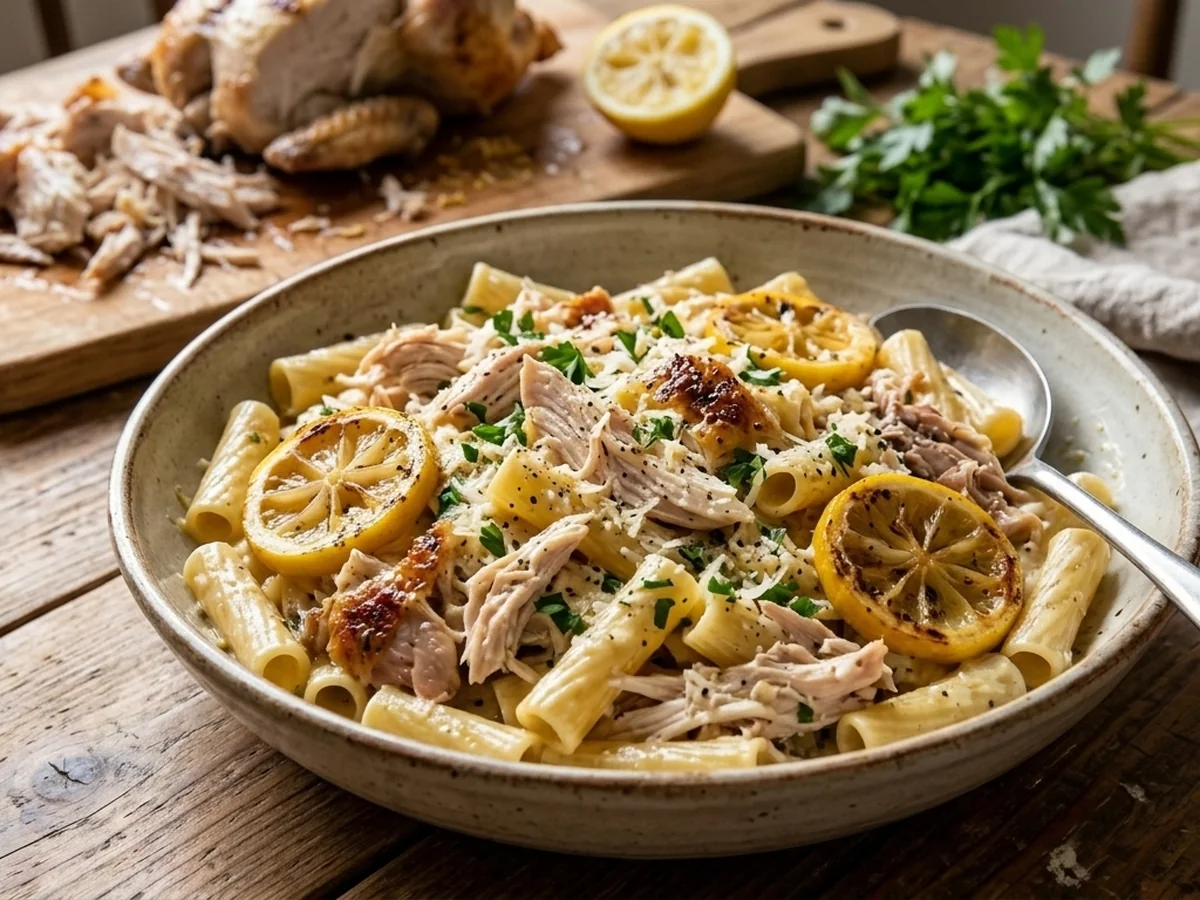
Busy weeknight schedules often leave little room for roasting raw poultry from scratch, which is why utilizing leftover or rotisserie chicken is a common practice to reduce total prep time for pasta dishes. Pulling already cooked meat off the bone lets home cooks bypass the longest step of the meal entirely. When you are assembling an easy lemon garlic chicken pasta recipe, this shortcut keeps you on track during a tight evening timeline.
Practical execution makes all the difference when working with precooked poultry. To get the best results, shred or dice the chicken breast while your pasta water heats up so it is ready to go into the pan. Common guidance suggests adding minced garlic after sautéing your onions to prevent burning, which protects the aromatic base of your dish. You can then warm the poultry pieces directly in the skillet alongside your heavy whipping cream and aromatics right before tossing everything together.
A few common mistakes to avoid include dumping cold chicken straight from the refrigerator into a simmering pan, which can drop the temperature of your cream sauce and disrupt the texture. Instead, let the meat sit at room temperature for a few minutes while you prep, or warm it gently in the sauce. Furthermore, remember that heavy whipping cream is a primary component for creating the base of a creamy pasta sauce, and lemon zest and lemon juice are used to balance the richness of cream-based sauces. Incorporating these elements at the correct stage ensures your time-saving meal maintains restaurant-quality flavor and balance.
Step-by-Step Cooking Instructions

Creating this meal involves searing the chicken until golden, building a balanced sauce, and properly emulsifying the liquids with the pasta. Follow these steps to ensure a smooth, restaurant-quality result.
- Season your chicken breast with salt and pepper before placing it in a hot skillet, cooking each side until a deep golden crust forms and the meat is fully cooked.
- Remove the chicken from the pan and add your garlic cloves to the remaining fat, sautéing gently until fragrant but not browned, as this is standard practice to avoid a bitter taste.
- Pour in the heavy whipping cream, which serves as the primary component for creating the base of a creamy pasta sauce.
- Whisk in the fresh lemon zest and lemon juice to balance the richness of the cream base, as these ingredients are essential for cutting through the fat.
- Transfer your cooked pasta directly into the skillet, adding a small splash of starchy pasta water to help emulsify and thicken the sauce for a better coating.
- Slice the rested chicken into strips and toss it into the pan, finishing the dish with a generous dusting of parmesan cheese before serving immediately.
Using leftover or rotisserie chicken is a common time-saving trick if you want to skip the searing step entirely. When combining the sauce and noodles, keep the heat low to prevent the cream from breaking. If the mixture seems too thick, adding a little more reserved pasta water will help restore a silky consistency.
Storing Lemon Garlic Chicken Pasta

Store leftover poultry and noodle dishes in airtight containers in the refrigerator for up to three days. Heavy cream is a primary component for creating the base of a creamy pasta sauce, and proper chilling helps maintain its structure. Let the meal cool completely before sealing the lid to prevent condensation from altering the texture of the noodles.
Reheat individual portions gently on the stovetop over low heat to prevent the dairy from separating. Add a splash of water or milk while warming the skillet to help restore the smooth consistency of the citrus and garlic glaze. Avoid high heat settings, because intense temperatures can cause the fats to split.
Pair this comforting skillet dinner with warm crusty artisan breads or a crisp green side salad. The acidity of fresh lemon zest and lemon juice are used to balance the richness of cream-based sauces, making bright salads a natural accompaniment. Fresh greens cut through the savory weight of the dish for a balanced meal.
Frequently Asked Questions
How do you make creamy garlic lemon chicken pasta?
You can prepare this dish by searing seasoned chicken breast in a skillet until golden, setting it aside, and then building the sauce using garlic, heavy cream, and parmesan cheese. Toss the cooked pasta directly into the skillet along with your chicken and a splash of starchy pasta water to bring everything together.
How can I make lemon garlic pasta creamy?
Heavy cream is a primary component for creating the base of a creamy pasta sauce. Incorporating starchy pasta cooking water helps emulsify the fat and liquids so the sauce clings smoothly to every strand of noodles without breaking.
What cream is used for creamy chicken pasta?
Heavy whipping cream is typically used to achieve a rich and stable sauce that thickens nicely as it simmers. This high fat dairy product resists curdling when combined with cheese and warm pan juices better than lighter milks.
What makes the sauce in lemon garlic pasta so rich and flavorful?
Sautéed garlic cloves provide a savory aromatic foundation while butter and heavy cream build a velvety texture. Lemon zest and lemon juice are used to balance the richness of cream-based sauces, keeping the flavor bright and well rounded.
Conclusion
Decide to whip up a batch of creamy lemon garlic chicken pasta tonight to bring rich comfort food right to your dinner table. You can easily pull together this comforting skillet meal using standard kitchen staples and simple cooking techniques. Gather your ingredients, prep your chicken, and enjoy a warm skillet of homemade goodness.